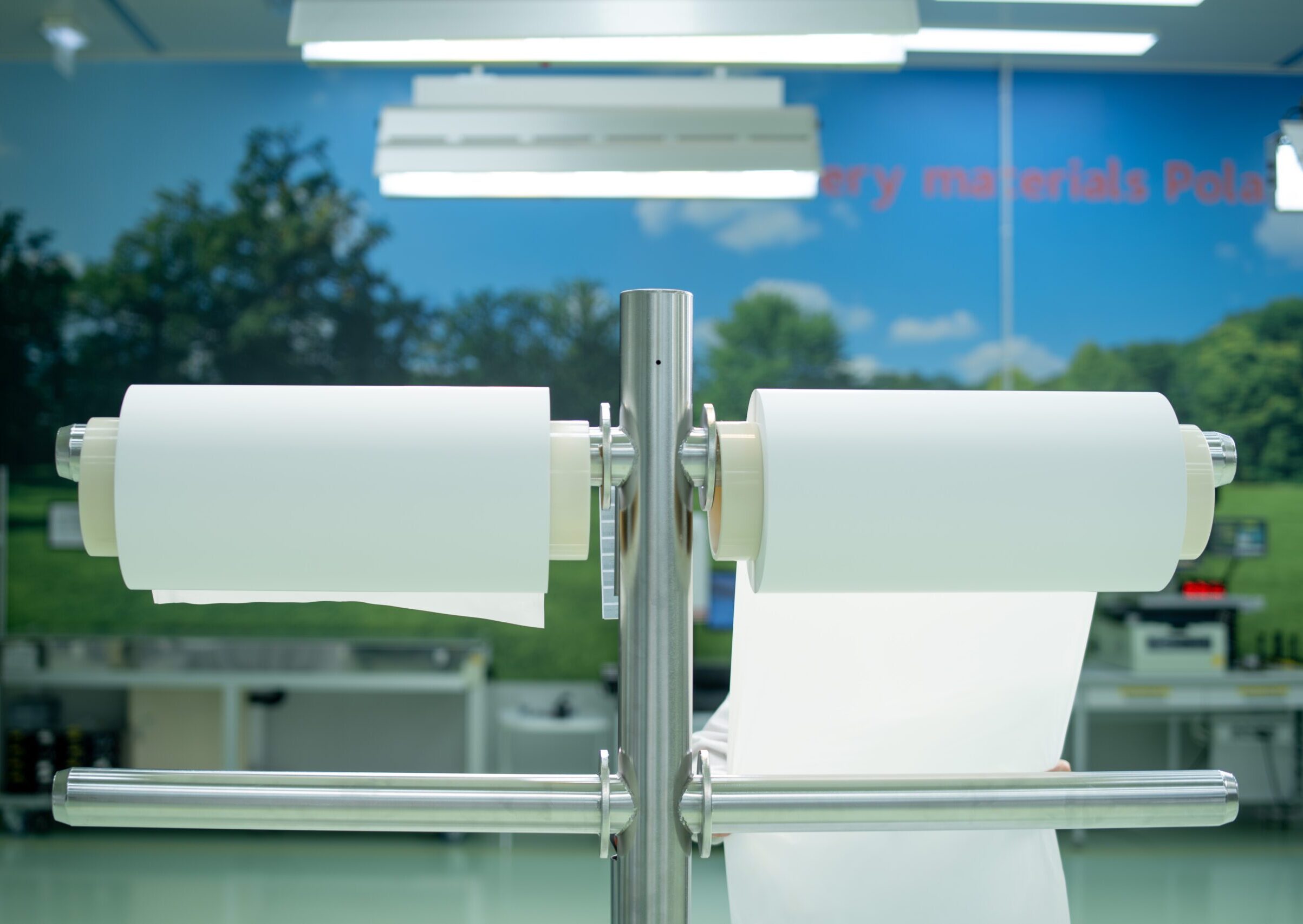
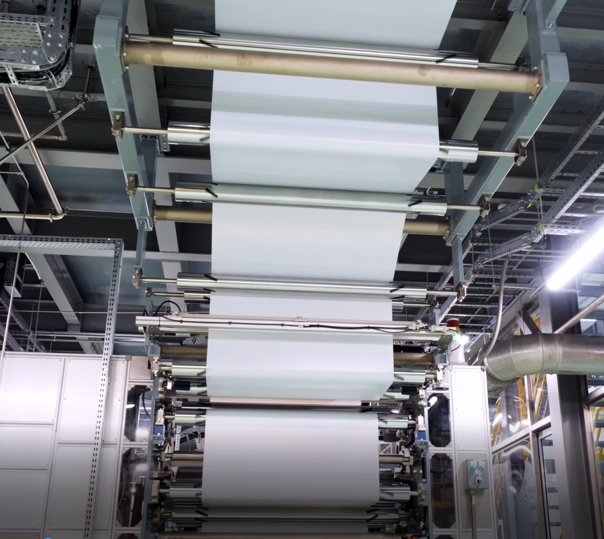
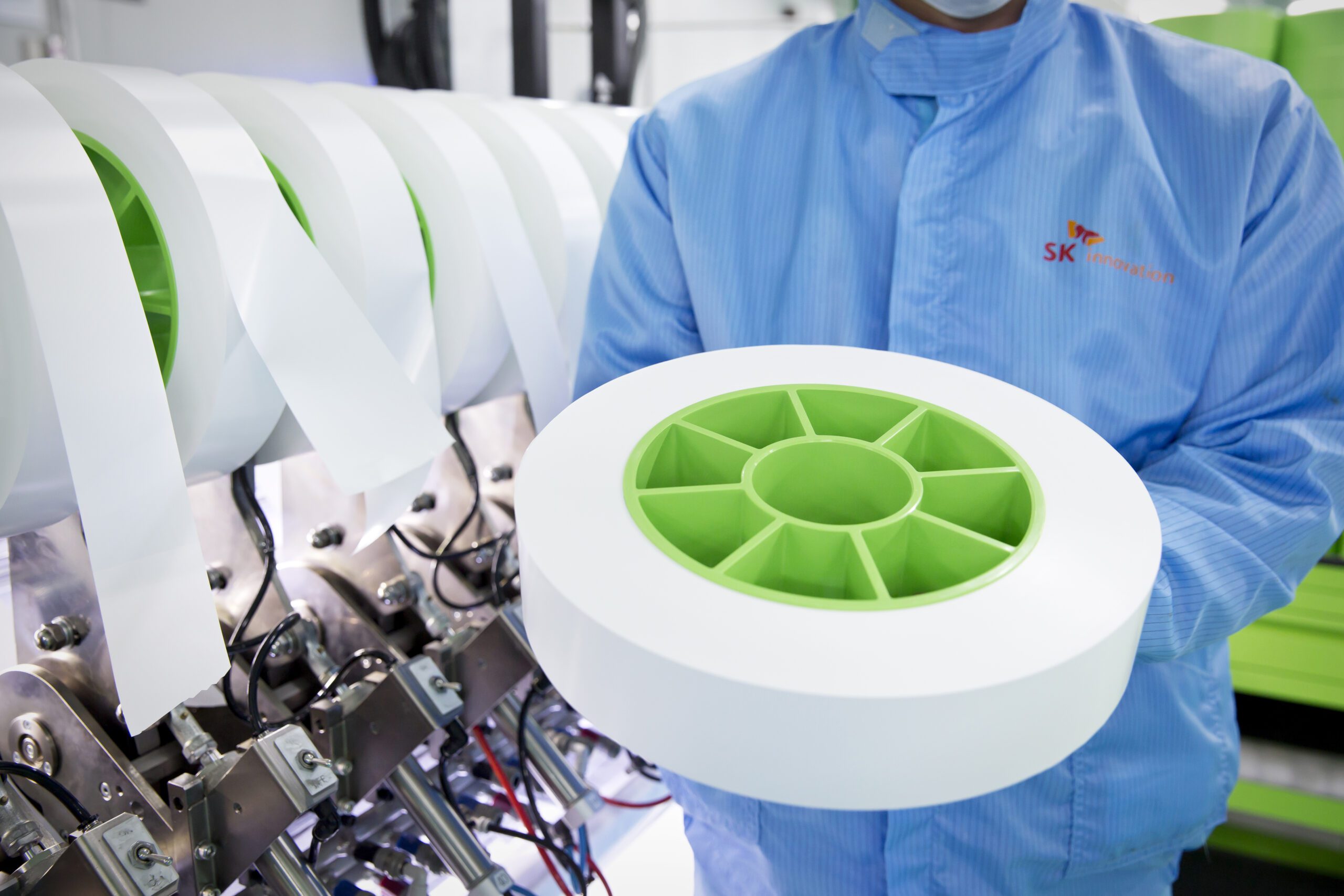
The latest technological solutions used in separators manufactured by SK hi-tech battery materials Poland guarantee high product quality, which translates into significant improvement of battery parameters in which they are used. Separators manufactured in our plant are used mainly in the automotive industry.
Separator
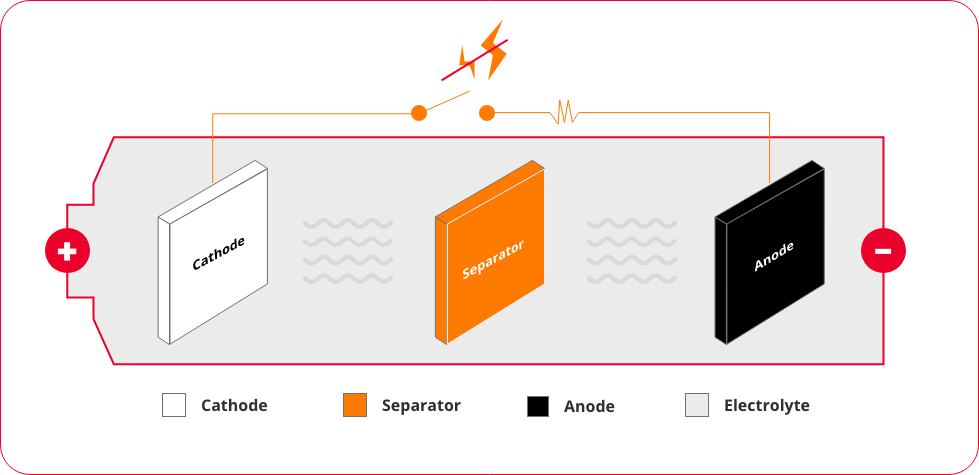
A cell consists of 4 main components
Cathode
Anode
Electrolyte
Separator
Separator, a key component in Lithium-ion batteries, is a microporous film placed between the anode and cathode to prevent short-circuiting inside a battery during charging and discharging processes. It also provides channels for ions to move between the electrodes, thereby determining the electrochemical performance and safety.
Separator structure
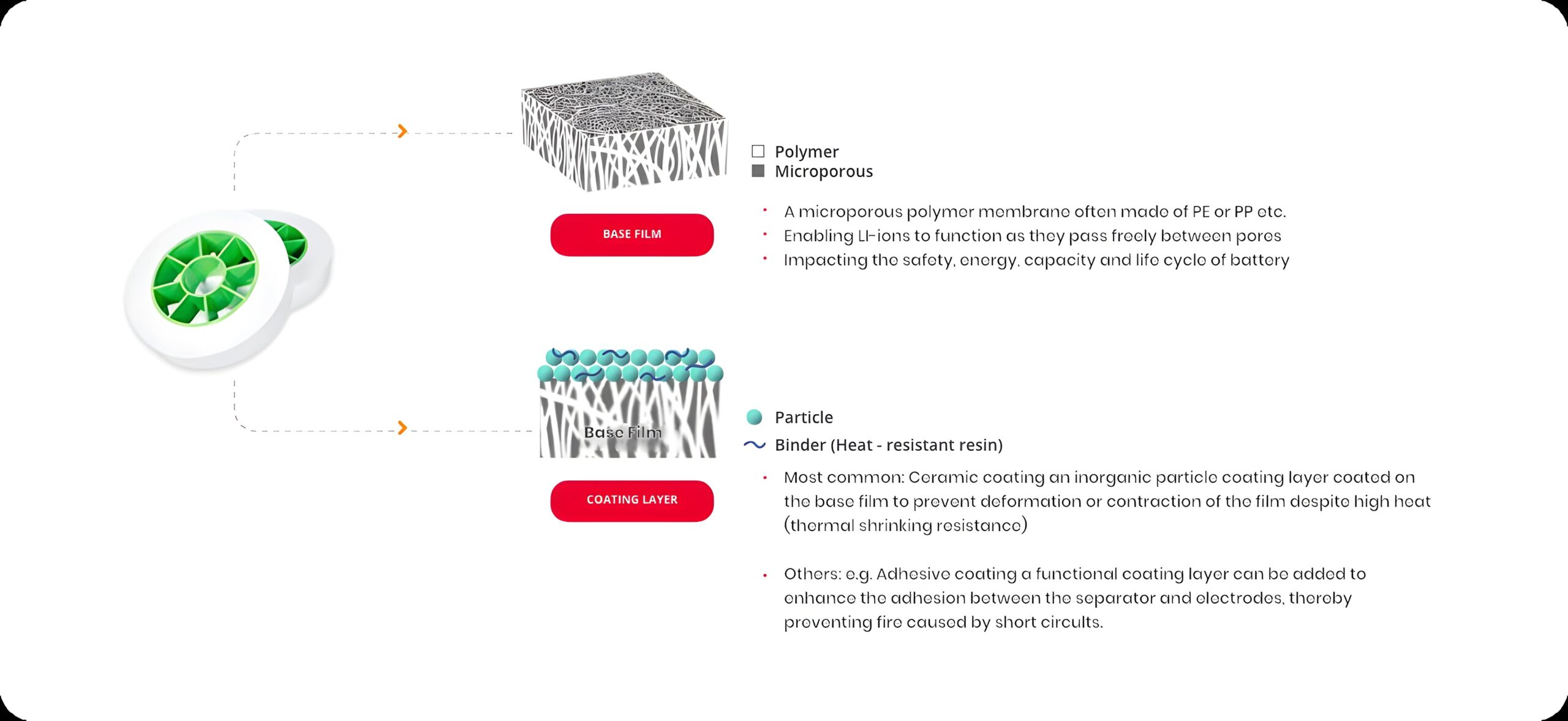
A Li-on separator mainly consist a Base Film that plays a significant role in safety and performance, and a Coating Layer that contains inorganic materials to ensure the thermal stability of separator.
*PP: Polipropylene / *PE: Polyethylene
Separator types
Separators are generally classified into the Wet process or the Dry process, depending on the process principles.
Process principle
Thermally induced phase separation
Wet process
Dry process
Crystal transformation
Main products
Single layer PE film, Multi layer film (PE/PP)
PP (single layer film), PE (single layer film), Double layer film, Multi layer film
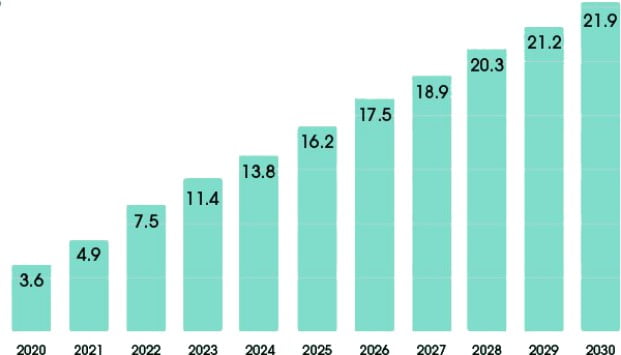
Lithium-ion battery separators market size outlook
(Unit: Bil USD)
*Source: <2023> SCM Analysis and market outlook for UB 4 major materials (-2030)
Wet process (62%) vs Dry process (38%)
The dry processing method separators have advantages in terms of manufacturing costs, yet they have limitations when utilized as high-energy density batteries. Wet-laid separators is expected to stay dominated.
Solutions to improve
thermal stability
Porous layer coating
Aramid coating
Ceramic particle coating
What makes our separators outstanding?
SK hi-tech battery materials Poland is part of one of the largest manufacturers of lithium-ion battery separators in the world – SK ie technology. Our separator, manufactured in a wet process, is characterized by exceptional quality and safety.